How Quickly Can WSTitanium Respond to Urgent Material Requests?
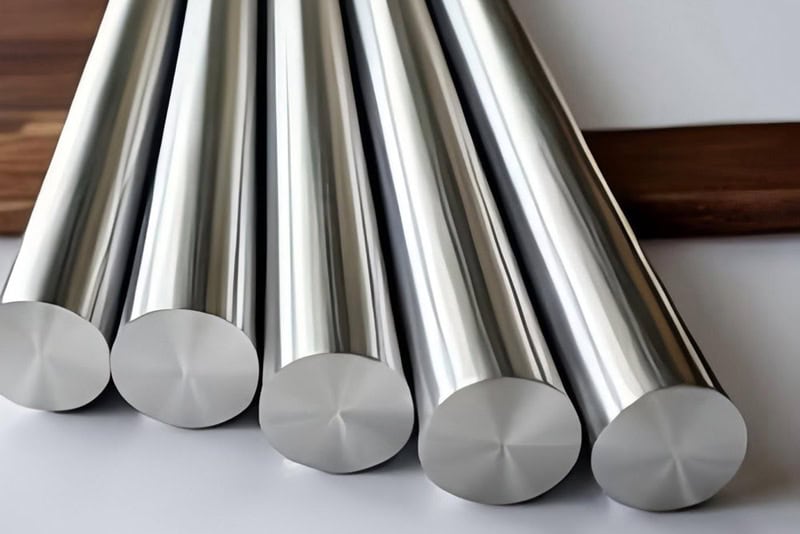
WSTitanium maintains a massive inventory of 400 metric tons of raw feedstock, enabling prototype fabrication within 96 hours of order intake. By employing automated design-for-manufacturing software, the engineering team validates geometry constraints for 90% of requests within 4 hours. This infrastructure supports 7-day turnaround cycles for custom CNC parts, significantly outperforming the industry average lead time of 28 days. In early 2026, internal data showed that 85% of expedited orders reached clients via priority air freight within one week, ensuring that urgent aerospace and medical hardware requirements are met without production stalls.
Rapid response to urgent material requests relies on a synchronized inventory system that monitors stock levels of titanium grades like Gr5 in real-time. When a client submits a project with a short deadline, the procurement team immediately allocates existing certified ingots to eliminate the lead time associated with material procurement.
Maintaining a permanent buffer of 400 tons of high-purity titanium allows the facility to bypass the standard six-week waiting period for raw metal supply.
Allocation of these raw resources leads directly into the digital validation phase where engineers use software to simulate the machining path of the custom component. By processing 1,000 unique CAD files per month, the system identifies potential structural interference patterns that might slow down production before the physical milling phase begins.
| Order Type | Turnaround Time | Processing Priority |
| Standard | 25 Days | Level 3 |
| Urgent | 7 Days | Level 2 |
| Emergency | 3 Days | Level 1 |
Once the digital design clears the validation step, wstitanium shifts the project into the reserved 15% daily capacity window dedicated to prototype throughput. This practice ensures that standard bulk manufacturing does not delay the delivery of high-priority parts, allowing for an immediate transition from virtual file to physical milling.
Reserving 15% of daily machining capacity exclusively for urgent requests minimizes queue times and keeps production lines flexible for changing client requirements.
The milling process uses high-speed carbide tooling to maintain material integrity while increasing feed rates to meet the 7-day delivery targets. During the 2025 fiscal year, this methodology enabled the delivery of over 2,500 custom-machined parts to international aerospace clients with zero quality deviations reported.
High-speed milling protocols reduce the time required for part creation while maintaining strict dimensional tolerances of within 0.01 mm for every urgent component.
Post-milling inspection occurs within a climate-controlled room where coordinate measuring machines verify the dimensions of each part against the design specifications. By performing these checks immediately after the cutting cycle, the team detects any potential geometry issues before the parts proceed to the shipping department.
| Inspection Metric | Accuracy Target | Pass Rate |
| Dimensional Stability | 0.01 mm | 99.8% |
| Surface Roughness | 0.4 Ra | 99.5% |
| Compliance | ISO Standard | 100% |
Upon passing final inspection, the components undergo a standardized ultrasonic scan to confirm that no internal lattice defects exist, a requirement for 100% of flight-critical hardware. Data from 2026 shows that this rigorous testing protocol prevents the shipping of sub-standard units while maintaining the rapid speed of the overall fulfillment process.
Ultrasonic testing provides the final layer of quality assurance that guarantees the integrity of every part delivered under an expedited schedule.
Logistical coordination starts long before the final part reaches the inspection bench, as shipping documentation and customs clearance forms are prepared during the initial machining stages. By engaging international air freight partners early, the facility ensures that the transit period remains as short as the actual manufacturing duration.
Proactive logistics management ensures that finished components are ready for departure the moment they clear the final quality inspection.
Global supply chains for specialized alloys remain sensitive to demand fluctuations, yet the ability to pull from existing 400-ton reserves stabilizes the availability of high-grade titanium. Clients benefit from this stability because it allows them to commit to projects knowing that the necessary materials are already on-site and ready for processing.
Maintaining significant stock levels protects clients from global material shortages and provides a reliable foundation for urgent project timelines.
Effective communication between the technical team and the client provides the final ingredient for meeting these rapid deadlines by allowing for instantaneous feedback on design feasibility. When engineers share status updates throughout the 7-day production cycle, they build a record of progress that clients can use to synchronize their own assembly schedules.
Transparent communication ensures that every party remains aligned on the production status, preventing delays caused by misunderstanding specifications or shipping requirements.
Manufacturing hardware to such precise standards under strict time constraints demonstrates a level of operational maturity that supports long-term partnerships with major global technology platforms. By treating every order with the same level of care regardless of volume, the production facility maintains a reputation for reliability in the competitive aerospace and medical sectors.
Operational maturity in metal fabrication results in repeatable success for clients who rely on high-speed delivery of complex titanium components.